The El Camino de Santiago attracts 400,000 pilgrims a year. If you’re planning to join them but not sure which path to take, check out my private tour with Camino Guide Monica Fernandez Chantada below (previously published by StyleBlueprint). For information on how to do this trip with Moni, go here.
Monica and I walked three continents together, but were finally sitting before blazing bonfires on a beach in her hometown, Vigo, Spain. I met Moni in Nashville in 2010 at a birthday party. We discovered our homes and the high schools where she taught Spanish and I taught English were ten minutes apart. We became friends walking alongside the Stones River and around Radnor Lake. We discussed family, romance, travel, and Paulo Coelho. The Pilgrimage and The Alchemist, based on the Brazilian author’s experience of walking El Camino de Santiago (often called The Way) had inspired us both.
Since the 9 th century, pilgrims have traveled across Moni’s province of Galicia to reach the Cathedral of Santiago, thought to be the burial ground of Saint James. In 2016, 278,000 hikers citing spiritual or cultural reasons received certificates, still written in Latin, for completing the journey. When I told Moni that God and Santiago, hero in The Alchemist, were calling me to move abroad as she had done, she laughed and said the novel (written in Portuguese and translated into 70 languages) convinced her to follow her heart, see foreign lands, and grow, too.
Monica returned to Spain three times after we met—when her father died, when her work visa wasn’t extended, when her holiday visa expired. Through Skype we vowed to see each other again, hopefully in Galicia, where she lived, taught English, and became guides for Spanish Steps Camino Tours.
In 2014 I left my homeland on a quest, too, and taught English two years in Marrakesh. At fall break, Moni visited me in Morocco. We traveled 900 miles—wandering Chefchouen’s blue streets, exploring Fes’ medieval medina, scaling Aït Benhaddou, set of Lawrence of Arabia, Gladiator, and Game of Thrones. Our lives felt epic as we trekked on camels across the Sahara Desert, then sat before a campfire on flour-soft sand as Berber guides played drums under a diamond-studded black velvet sky. Spring 2015, I met Moni and Ale in Andalusia, Spain—the place where Santiago crossed to Africa to see the pyramids of Egypt. Summer 2015, I set out from Africa to see the treasures of northern Spain.
Flames danced to the tide’s tempo as locals jumped fires and swam in the ocean at midnight for renewal, and energy. It was St. John’s Eve, commemorating the birth of John the Baptist, cousin of Jesus. I loved that the holiday coincided with Summer Solstice season so I could savor this moment on one of the year’s longest days. Throughout Europe and Latin America, children threw school notebooks into fires and adult wrote on slips of paper whatever they needed purged—mistakes, memories weighing them down on life’s path. Embers glowed and sparks spewed as the napkin I’d written on turned into black, curling crepe paper, then disappeared on the wind. Scattered in the sand around us were scalloped shells, symbols of The Camino collected by travelers before certificates were issued as proof of reaching Santiago.
Northern Portugal and Spain are Bucket List Worthy the mountains, waters, Celtic ruins, seafood, wine, and wonderful people. We started in Porto, Portugal. which has one of the biggest St. John’s Day celebrations in the world. Live music rose from the twinkling hills spread before our balcony perched above the Douro River. Likewise our Airbnb host, Paul, gave us a warm welcome and must-sees over a bowl of local cherries, and a bottle of wine.
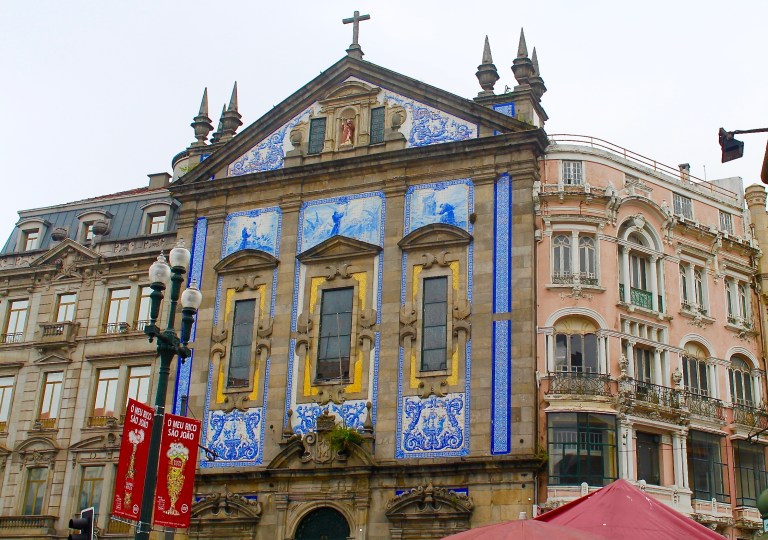
By boat we enjoyed the Ribeira, colorful buildings on the north side, and the port caves of Vila Nova de Gaia on the south bank, then toured and tasted at Ferreira Cellars, port producer since 1751. Among beautiful Romanesque, Baroque, Gothic and Rococo cathedrals is the 18 th century Igreja dos Clérigos and viewing tower. Double delights are Carmelitas, a 17 th century convent, and Carmo, an 18 th century monastery, separated by a house only 1 meter wide built to separate the nuns and monks. Carmo, like the Porto’s train station, is covered in Azulejos tiles with images depicting Porto’s history.
Lunch was fresh fish (5 euros) and a jug of Vinho verde (green wine) at Mercado do Bolhão. A must-see for international teachers, Harry Potter fans, and busy moms is Lello Bookstore, where J. K. Rowling, while teaching English in Portugal, had a child and wrote the first three chapters of Harry Potter and the Philosopher’s Stone. The staircase that inspired Hogwarts is quite the photo opp.
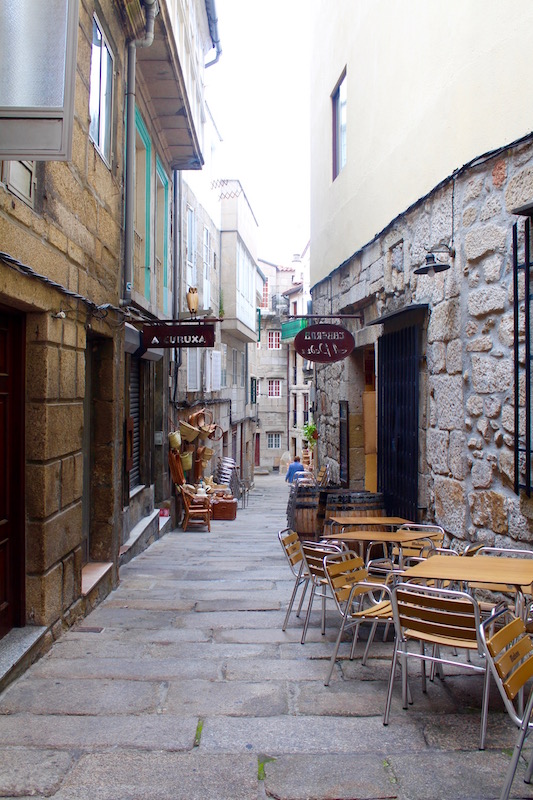
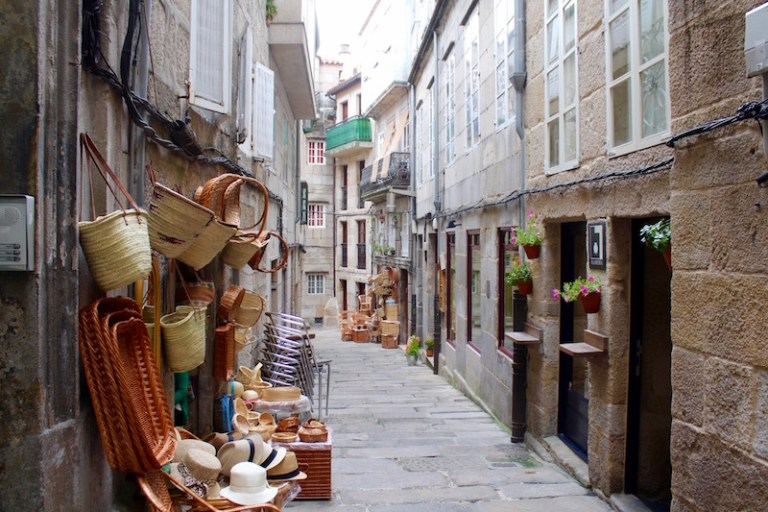
Only 10 kilometers from Porto, a tram ride away, is Miramar Beach for surfers, jumping waves, and sipping drinks at a beach bar at sunset. Two hours by train or bus north is Vigo, largest town in Galicia and biggest fishing port in Europe. The marine life is so rich in the Vigo estuary that Jules Verne hid treasure there in his novel, 20,000 Leagues Under the Sea. I fell in love with de las Ostras Street for its raw oysters, sardines, octopus, and other fresh catch.
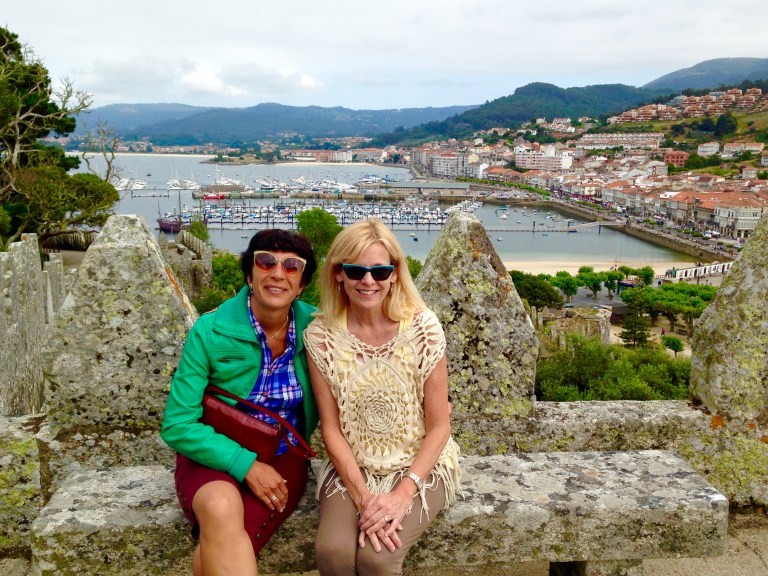
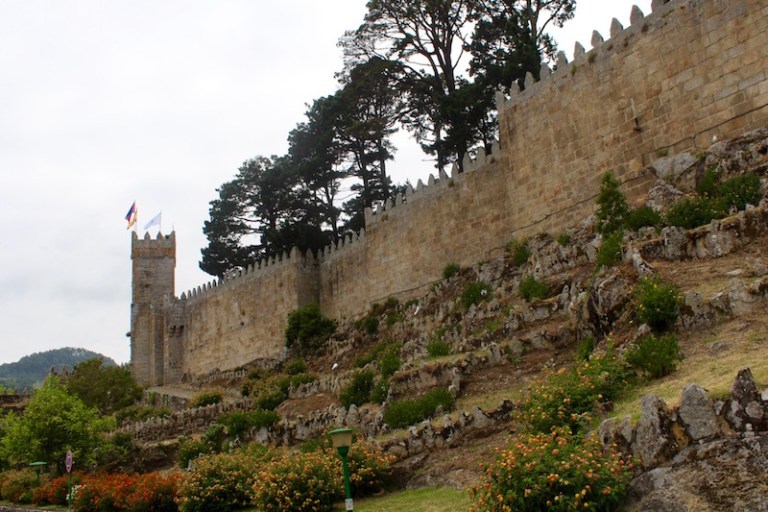
One of three exciting excursions within an hour from Vigo is The Parador of Baiona is a Galician manor house built within the walls of a medieval fortress that protected the port from pirates and other enemies. Here the first ships arrived in Europe to report the discovery of America, an event celebrated every March where a replica of The Pinta is docked beside yachts headed to the Mediterranean or Caribbean.
On A Guarda harbor fishing boats bob on colorful kaleidoscopic waters reflecting restaurants packed during Lobster Fest. Monte de Santa Trega rises 1,118 feet behind them where we hiked to Santa Tecla, a 2 nd century BC Celtic fort village. From the highest point, San Franciso Peak and the Road of Crosses, are views of Spanish and Portuguese coasts where the Atlantic Ocean meets the Rio Miño.
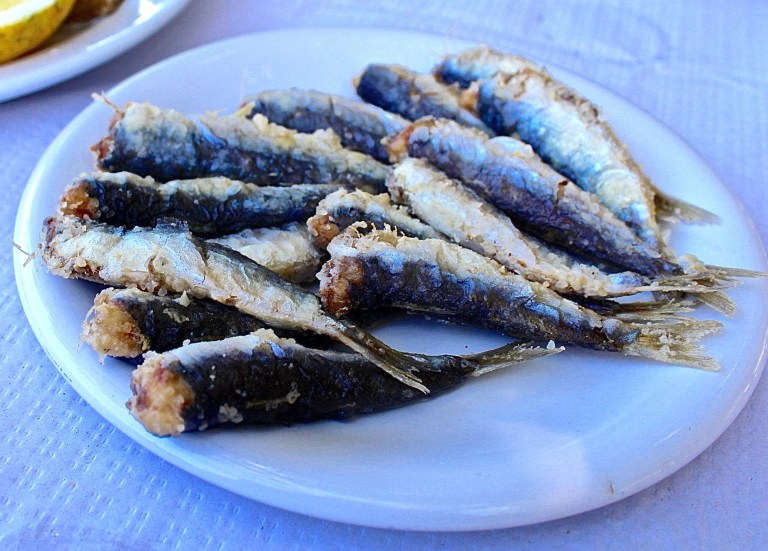
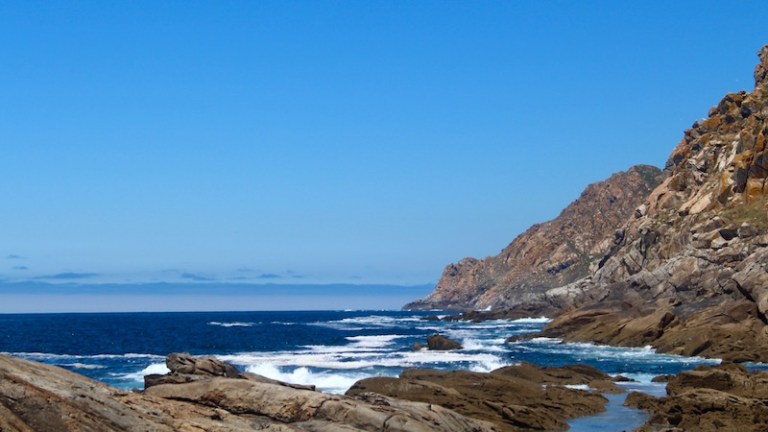
My stay culminated with Cies Isles, called by Romans “The Islands of the Gods.” With tent in tow Moni, Ale, Vesa their London Airbnb guest, and I took a ferry from Vigo’s port to a dock near Playa de Rodas, named by The Guardian as the Best Beach in the World for its white sand, crystal clear blue waters, and rainbow fish. We later ate fresh, fried sardines and fish, pitched the tent under pines with a view of the sea, then hiked so high into the clouds we passed seagulls herding their downy chicks. On one side were sailboats on an estuary so calm locals call it the Caribbean. On the other were cliffs like those of the Scottish highlands where below Atlantic waves crash wildly against the rugged shore. At the lighthouse, we stood before a golden sunset. Another journey ended…until the next one…
Northern Portugal and Spain are Bucket List Worthy the mountains, waters, Celtic ruins, seafood, wine, and wonderful people. We started in Porto, Portugal. which has one of the biggest St. John’s Day celebrations in the world. Live music rose from the twinkling hills spread before our balcony perched above the Douro River. Likewise our Airbnb host, Paul, gave us a warm welcome and must-sees over a bowl of local cherries, and a bottle of wine.
By boat we enjoyed the Ribeira, colorful buildings on the north side, and the port caves of Vila Nova de Gaia on the south bank, then toured and tasted at Ferreira Cellars, port producer since 1751. Among beautiful Romanesque, Baroque, Gothic and Rococo cathedrals is the 18 th century Igreja dos Clérigos and viewing tower. Double delights are Carmelitas, a 17 th century convent, and Carmo, an 18 th century monastery, separated by a house only 1 meter wide built to separate the nuns and monks. Carmo, like the Porto’s train station, is covered in Azulejos tiles with images depicting Porto’s history.
Lunch was fresh fish (5 euros) and a jug of Vinho verde (green wine) at Mercado do Bolhão. A must-see for international teachers, Harry Potter fans, and busy moms is Lello Bookstore, where J. K. Rowling, while teaching English in Portugal, had a child and wrote the first three chapters of Harry Potter and the Philosopher’s Stone. The staircase that inspired Hogwarts is quite the photo opp.
Only 10 kilometers from Porto, a tram ride away, is Miramar Beach for surfers, jumping waves, and sipping drinks at a beach bar at sunset. Two hours by train or bus north is Vigo, largest town in Galicia and biggest fishing port in Europe. The marine life is so rich in the Vigo estuary that Jules Verne hid treasure there in his novel, 20,000 Leagues Under the Sea. I fell in love with de las Ostras Street for its raw oysters, sardines, octopus, and other fresh catch.
One of three exciting excursions within an hour from Vigo is The Parador of Baiona is a Galician manor house built within the walls of a medieval fortress that protected the port from pirates and other enemies. Here the first ships arrived in Europe to report the discovery of America, an event celebrated every March where a replica of The Pinta is docked beside yachts headed to the Mediterranean or Caribbean.
On A Guarda harbor fishing boats bob on colorful kaleidoscopic waters reflecting restaurants packed during Lobster Fest. Monte de Santa Trega rises 1,118 feet behind them where we hiked to Santa Tecla, a 2 nd century BC Celtic fort village. From the highest point, San Franciso Peak and the Road of Crosses, are views of Spanish and Portuguese coasts where the Atlantic Ocean meets the Rio Miño.
My stay culminated with Cies Isles, called by Romans “The Islands of the Gods.” With tent in tow Moni, Ale, Vesa their London Airbnb guest, and I took a ferry from Vigo’s port to a dock near Playa de Rodas, named by The Guardian as the Best Beach in the World for its white sand, crystal clear blue waters, and rainbow fish. We later ate fresh, fried sardines and fish, pitched the tent under pines with a view of the sea, then hiked so high into the clouds we passed seagulls herding their downy chicks. On one side were sailboats on an estuary so calm locals call it the Caribbean. On the other were cliffs like those of the Scottish highlands where below Atlantic waves crash wildly against the rugged shore. At the lighthouse, we stood before a golden sunset. Another journey ended…until the next one…
Porto, Portugal
View from our Airbnb in PortugalMy girl, Moni, beach-loving soul sister, loved showing me around Portugal and her home, Galicia.After a hike down the beach and a long wait for lunch, it finally came.Served on my china pattern no less…seafood worth the wait.
Galicia, Spain
I so loved meeting Monica’s sweet sister, Loli, who treated us to amazing fresh seafood in La Guarda including my favourite dish, Octopus.
Parador of Baiona
The Pinta
Moni’s hometown, Vigo
Monument of Spanish Civil War which I taught this year in the DR as we read Hemingway’s For Whom the Bell Tolls
(Below) Not to be missed next week, St. John’s Eve–story here.
Loved meeting Moni’s friends, sisters Ana (left) and Susana
LOVED, LOVED, LOVED Camping and hiking the Cies Islands. Until next time…
Watch Episode One here or skip to sections which interest you marked below.
A lot of us are getting through sheltering at home by meeting online with old friends. I thank God for technology that bashes through borders during a pandemic. Looking back at how we’ve navigated change in the past can transform how we handle new norms in the present and future. Being grounded for many has been grounding–even if what we know about an invisible enemy seems to shift every hour. In Nashville we’ve been saturated with spring storms and power outages. Worldwide we’re assaulted with staggering statistics of death tolls and unemployment. So I’m wondering…
How are we doing? Reassessing life’s meaning? Seeking a new job or career? A new life? Needing to reinvent ourselves again?
I’d planned to start a podcast this summer but decided to first launch as a YOUTUBE series since we’re home on computers more than commuting to work or traveling. Welcome to this first episode where we’ll travel to Spain and meet my friend, Monica Fernandez Chantada, master of reinvention and growth, who shows us how she and her country are dealing with months of pandemic lockdown, social distancing, and unemployment. Her journey from a Corporate Human Resources position to International Teacher to Camino de Santiago Tour Guide to Life Coach will inspire you as she shares coping tips, travel go-to places, and the beauty of her backyard. She explains how saying “Yes!” changes challenges into adventures and offers to teach you Spanish online.
Moni will walk us through her province of Galicia, Bucket List worthy for its mountains, coast, Celtic ruins, wine, and wonderful people. Through here pilgrims since the 9th century have traveled to the Cathedral in Santiago on the Camino or St. James’ Way–backdrop for the Martin Sheen movie (trailer below). We’ve walked three continents together and I’m still inspired by her journey and spirit. I think you will be, too.
If you’re planning a getaway for when the coast is clear and up for a Camino or stay in Galicia, check out options at Moni’s company, Spanish Steps, and/or stay in her home in Vigo where she’s a Superhosthere.
11:30 How to Reinvent a Life (Again) From Journalism to Working in Corporate Human Resources Job to Teaching Spanish is the US to Camino de Santiago Guide “I always say ‘Yes!’ Every challenge, I take it!”–Moni
Never miss a post: travel inspiration, destination itineraries, tips, trends, and tales from the road here. Be the first to hear about online and destination travel writing retreats and workshops.