The El Camino de Santiago attracts 400,000 pilgrims a year. If you’re planning to join them but not sure which path to take, check out my private tour with Camino Guide Monica Fernandez Chantada below (previously published by StyleBlueprint). For information on how to do this trip with Moni, go here.
Monica and I walked three continents together, but were finally sitting before blazing bonfires on a beach in her hometown, Vigo, Spain. I met Moni in Nashville in 2010 at a birthday party. We discovered our homes and the high schools where she taught Spanish and I taught English were ten minutes apart. We became friends walking alongside the Stones River and around Radnor Lake. We discussed family, romance, travel, and Paulo Coelho. The Pilgrimage and The Alchemist, based on the Brazilian author’s experience of walking El Camino de Santiago (often called The Way) had inspired us both.
Since the 9 th century, pilgrims have traveled across Moni’s province of Galicia to reach the Cathedral of Santiago, thought to be the burial ground of Saint James. In 2016, 278,000 hikers citing spiritual or cultural reasons received certificates, still written in Latin, for completing the journey. When I told Moni that God and Santiago, hero in The Alchemist, were calling me to move abroad as she had done, she laughed and said the novel (written in Portuguese and translated into 70 languages) convinced her to follow her heart, see foreign lands, and grow, too.
Monica returned to Spain three times after we met—when her father died, when her work visa wasn’t extended, when her holiday visa expired. Through Skype we vowed to see each other again, hopefully in Galicia, where she lived, taught English, and became guides for Spanish Steps Camino Tours.
In 2014 I left my homeland on a quest, too, and taught English two years in Marrakesh. At fall break, Moni visited me in Morocco. We traveled 900 miles—wandering Chefchouen’s blue streets, exploring Fes’ medieval medina, scaling Aït Benhaddou, set of Lawrence of Arabia, Gladiator, and Game of Thrones. Our lives felt epic as we trekked on camels across the Sahara Desert, then sat before a campfire on flour-soft sand as Berber guides played drums under a diamond-studded black velvet sky. Spring 2015, I met Moni and Ale in Andalusia, Spain—the place where Santiago crossed to Africa to see the pyramids of Egypt. Summer 2015, I set out from Africa to see the treasures of northern Spain.
Flames danced to the tide’s tempo as locals jumped fires and swam in the ocean at midnight for renewal, and energy. It was St. John’s Eve, commemorating the birth of John the Baptist, cousin of Jesus. I loved that the holiday coincided with Summer Solstice season so I could savor this moment on one of the year’s longest days. Throughout Europe and Latin America, children threw school notebooks into fires and adult wrote on slips of paper whatever they needed purged—mistakes, memories weighing them down on life’s path. Embers glowed and sparks spewed as the napkin I’d written on turned into black, curling crepe paper, then disappeared on the wind. Scattered in the sand around us were scalloped shells, symbols of The Camino collected by travelers before certificates were issued as proof of reaching Santiago.
Northern Portugal and Spain are Bucket List Worthy the mountains, waters, Celtic ruins, seafood, wine, and wonderful people. We started in Porto, Portugal. which has one of the biggest St. John’s Day celebrations in the world. Live music rose from the twinkling hills spread before our balcony perched above the Douro River. Likewise our Airbnb host, Paul, gave us a warm welcome and must-sees over a bowl of local cherries, and a bottle of wine.
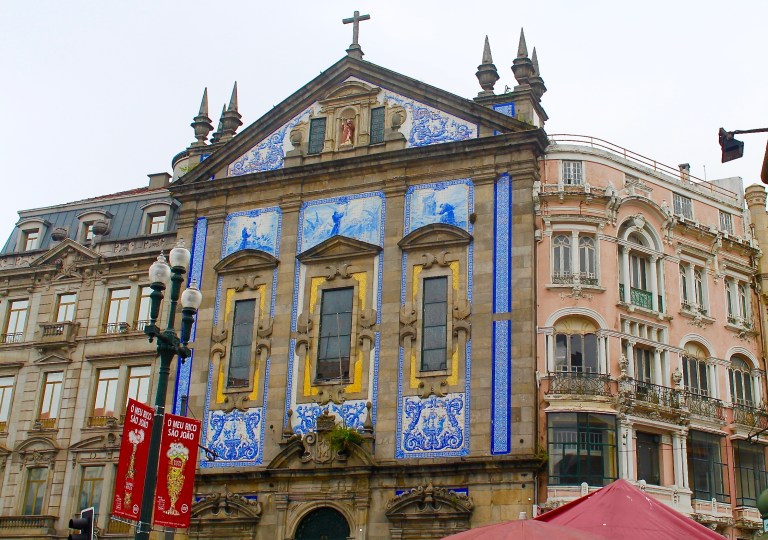
By boat we enjoyed the Ribeira, colorful buildings on the north side, and the port caves of Vila Nova de Gaia on the south bank, then toured and tasted at Ferreira Cellars, port producer since 1751. Among beautiful Romanesque, Baroque, Gothic and Rococo cathedrals is the 18 th century Igreja dos Clérigos and viewing tower. Double delights are Carmelitas, a 17 th century convent, and Carmo, an 18 th century monastery, separated by a house only 1 meter wide built to separate the nuns and monks. Carmo, like the Porto’s train station, is covered in Azulejos tiles with images depicting Porto’s history.
Lunch was fresh fish (5 euros) and a jug of Vinho verde (green wine) at Mercado do Bolhão. A must-see for international teachers, Harry Potter fans, and busy moms is Lello Bookstore, where J. K. Rowling, while teaching English in Portugal, had a child and wrote the first three chapters of Harry Potter and the Philosopher’s Stone. The staircase that inspired Hogwarts is quite the photo opp.
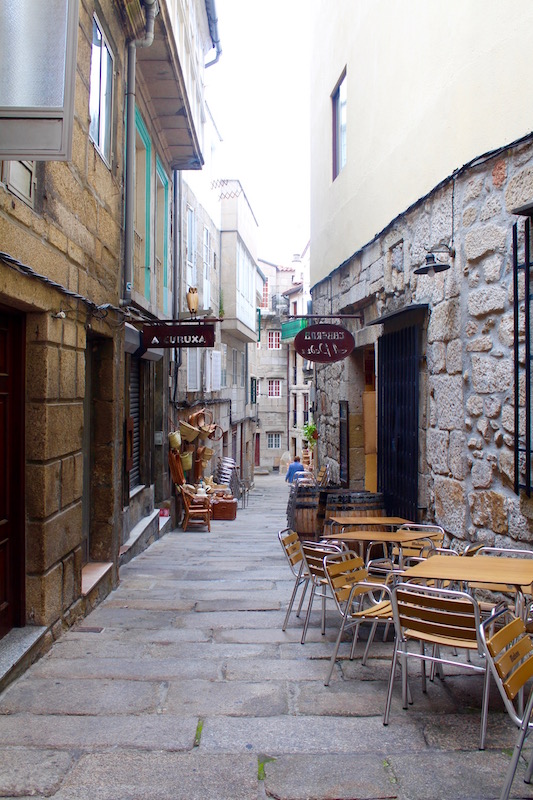
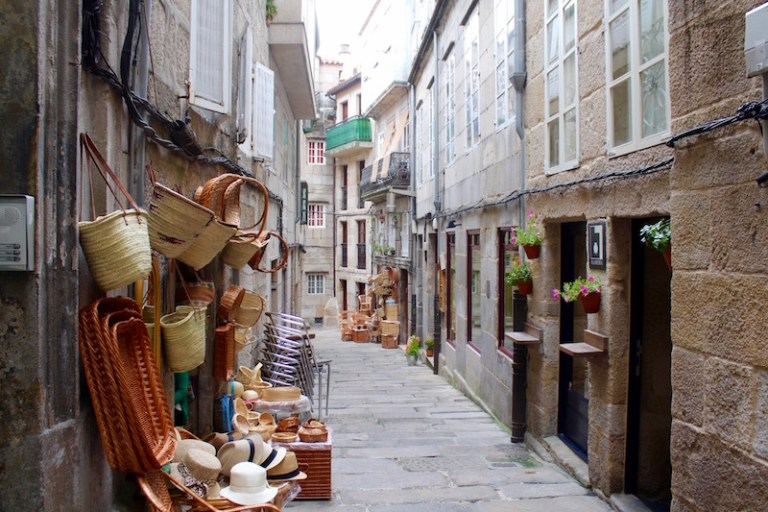
Only 10 kilometers from Porto, a tram ride away, is Miramar Beach for surfers, jumping waves, and sipping drinks at a beach bar at sunset. Two hours by train or bus north is Vigo, largest town in Galicia and biggest fishing port in Europe. The marine life is so rich in the Vigo estuary that Jules Verne hid treasure there in his novel, 20,000 Leagues Under the Sea. I fell in love with de las Ostras Street for its raw oysters, sardines, octopus, and other fresh catch.
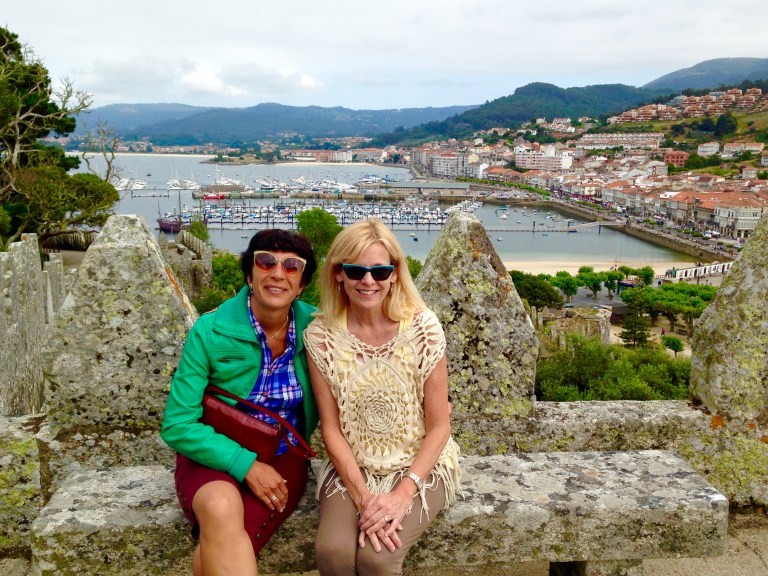
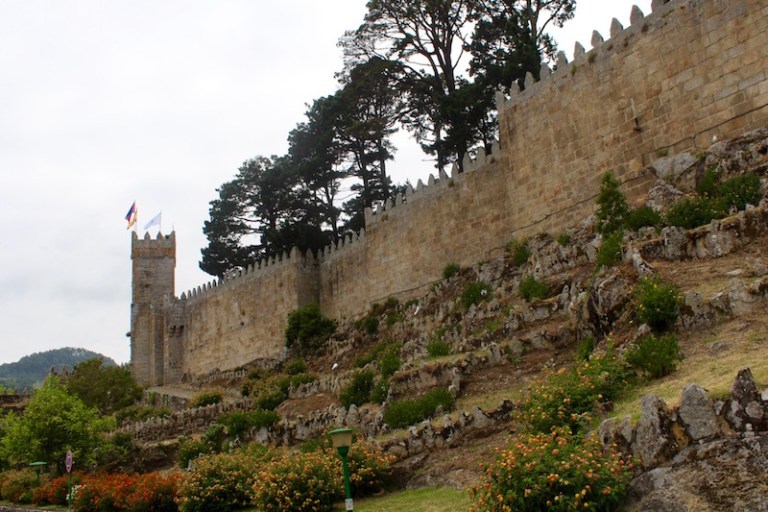
One of three exciting excursions within an hour from Vigo is The Parador of Baiona is a Galician manor house built within the walls of a medieval fortress that protected the port from pirates and other enemies. Here the first ships arrived in Europe to report the discovery of America, an event celebrated every March where a replica of The Pinta is docked beside yachts headed to the Mediterranean or Caribbean.
On A Guarda harbor fishing boats bob on colorful kaleidoscopic waters reflecting restaurants packed during Lobster Fest. Monte de Santa Trega rises 1,118 feet behind them where we hiked to Santa Tecla, a 2 nd century BC Celtic fort village. From the highest point, San Franciso Peak and the Road of Crosses, are views of Spanish and Portuguese coasts where the Atlantic Ocean meets the Rio Miño.
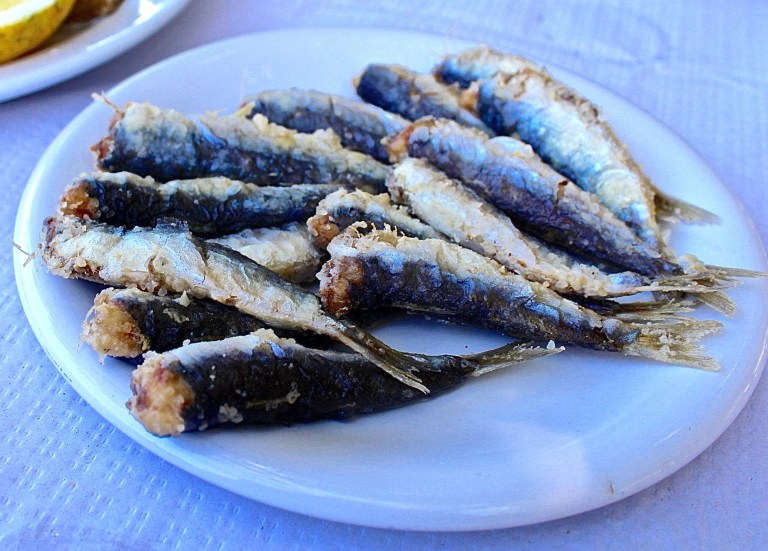
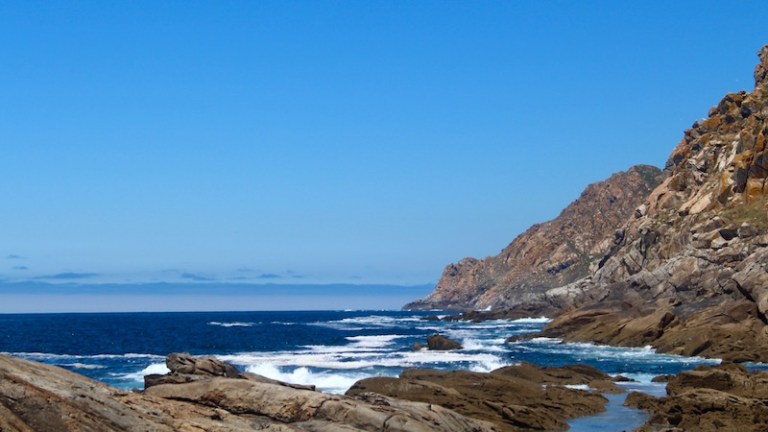
My stay culminated with Cies Isles, called by Romans “The Islands of the Gods.” With tent in tow Moni, Ale, Vesa their London Airbnb guest, and I took a ferry from Vigo’s port to a dock near Playa de Rodas, named by The Guardian as the Best Beach in the World for its white sand, crystal clear blue waters, and rainbow fish. We later ate fresh, fried sardines and fish, pitched the tent under pines with a view of the sea, then hiked so high into the clouds we passed seagulls herding their downy chicks. On one side were sailboats on an estuary so calm locals call it the Caribbean. On the other were cliffs like those of the Scottish highlands where below Atlantic waves crash wildly against the rugged shore. At the lighthouse, we stood before a golden sunset. Another journey ended…until the next one…
Northern Portugal and Spain are Bucket List Worthy the mountains, waters, Celtic ruins, seafood, wine, and wonderful people. We started in Porto, Portugal. which has one of the biggest St. John’s Day celebrations in the world. Live music rose from the twinkling hills spread before our balcony perched above the Douro River. Likewise our Airbnb host, Paul, gave us a warm welcome and must-sees over a bowl of local cherries, and a bottle of wine.
By boat we enjoyed the Ribeira, colorful buildings on the north side, and the port caves of Vila Nova de Gaia on the south bank, then toured and tasted at Ferreira Cellars, port producer since 1751. Among beautiful Romanesque, Baroque, Gothic and Rococo cathedrals is the 18 th century Igreja dos Clérigos and viewing tower. Double delights are Carmelitas, a 17 th century convent, and Carmo, an 18 th century monastery, separated by a house only 1 meter wide built to separate the nuns and monks. Carmo, like the Porto’s train station, is covered in Azulejos tiles with images depicting Porto’s history.
Lunch was fresh fish (5 euros) and a jug of Vinho verde (green wine) at Mercado do Bolhão. A must-see for international teachers, Harry Potter fans, and busy moms is Lello Bookstore, where J. K. Rowling, while teaching English in Portugal, had a child and wrote the first three chapters of Harry Potter and the Philosopher’s Stone. The staircase that inspired Hogwarts is quite the photo opp.
Only 10 kilometers from Porto, a tram ride away, is Miramar Beach for surfers, jumping waves, and sipping drinks at a beach bar at sunset. Two hours by train or bus north is Vigo, largest town in Galicia and biggest fishing port in Europe. The marine life is so rich in the Vigo estuary that Jules Verne hid treasure there in his novel, 20,000 Leagues Under the Sea. I fell in love with de las Ostras Street for its raw oysters, sardines, octopus, and other fresh catch.
One of three exciting excursions within an hour from Vigo is The Parador of Baiona is a Galician manor house built within the walls of a medieval fortress that protected the port from pirates and other enemies. Here the first ships arrived in Europe to report the discovery of America, an event celebrated every March where a replica of The Pinta is docked beside yachts headed to the Mediterranean or Caribbean.
On A Guarda harbor fishing boats bob on colorful kaleidoscopic waters reflecting restaurants packed during Lobster Fest. Monte de Santa Trega rises 1,118 feet behind them where we hiked to Santa Tecla, a 2 nd century BC Celtic fort village. From the highest point, San Franciso Peak and the Road of Crosses, are views of Spanish and Portuguese coasts where the Atlantic Ocean meets the Rio Miño.
My stay culminated with Cies Isles, called by Romans “The Islands of the Gods.” With tent in tow Moni, Ale, Vesa their London Airbnb guest, and I took a ferry from Vigo’s port to a dock near Playa de Rodas, named by The Guardian as the Best Beach in the World for its white sand, crystal clear blue waters, and rainbow fish. We later ate fresh, fried sardines and fish, pitched the tent under pines with a view of the sea, then hiked so high into the clouds we passed seagulls herding their downy chicks. On one side were sailboats on an estuary so calm locals call it the Caribbean. On the other were cliffs like those of the Scottish highlands where below Atlantic waves crash wildly against the rugged shore. At the lighthouse, we stood before a golden sunset. Another journey ended…until the next one…
Porto, Portugal
View from our Airbnb in PortugalMy girl, Moni, beach-loving soul sister, loved showing me around Portugal and her home, Galicia.After a hike down the beach and a long wait for lunch, it finally came.Served on my china pattern no less…seafood worth the wait.
Galicia, Spain
I so loved meeting Monica’s sweet sister, Loli, who treated us to amazing fresh seafood in La Guarda including my favourite dish, Octopus.
Parador of Baiona
The Pinta
Moni’s hometown, Vigo
Monument of Spanish Civil War which I taught this year in the DR as we read Hemingway’s For Whom the Bell Tolls
(Below) Not to be missed next week, St. John’s Eve–story here.
Loved meeting Moni’s friends, sisters Ana (left) and Susana
LOVED, LOVED, LOVED Camping and hiking the Cies Islands. Until next time…
Once upon a time… before watching Game of Thrones or touring castles in Europe… I taught my children and literature students tales of fairies, dragons, and knights. That chivalry must never die and dreams do come true.
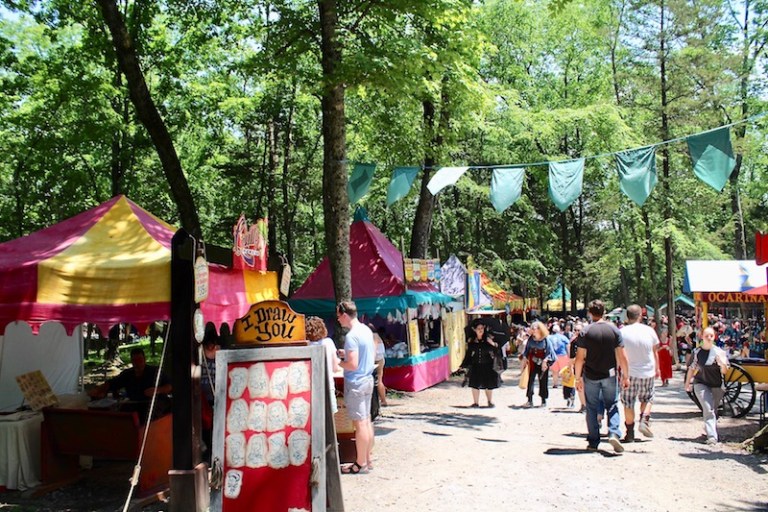
Love of history, fantasy and escape is alive and well at the Tennessee Renaissance Fest. Here you can feast on turkey legs like a king, see fairy houses, or hunt for dragons’ eggs.
There I tried to teach my son and daughter archery as my dad had tried to teach me. I still remember the archery tournament in Kentucky where he’d won the “Robin’s Hood Award” for hitting the bull’s eye with his first arrow, then splitting that arrow with his second shot. He wanted me to compete in contests, too. No pressure. 🙂
Two decades later… a couple of weeks ago my daughter chose to celebrate her birthday at the Fest where we watched jousting and my son handed me a bow and quiver of arrows to see if I could still hit a target. Last weekend I returned to finally meet the man who created the beloved tradition that throngs of folks enjoy–many in costume–yearly.
Photo courtesy of Tennessee Renaissance Festival
Fans dressed as mythical creatures line up at Tennessee Renaissance Fest
Great Family Fun at Tennessee Renaissance Festival
Fest Fans
Outlander fans will feel at home at the Tennessee Renaissance Festival, too.
Photo courtesy of Tennessee Renaissance Festival
Mike Freeman greets guests outside Castle Gwynn, located on forty acres he bought in 1976 near Triune. Friendly, fun, and sincere, he tells the inspiring story of a lifelong quest:
The first two most commonly asked questions are, ‘Do you live here?’ Yes I do. For the last 31 years I’ve lived here with my wife, Maggie, and our 2 dogs. The 2nd most commonly asked question is, ‘When are you going to get it finished?’ The answer: ‘When one of you wins the lottery, please remember me!’ I’ve been doing that for the last 34 years. It hasn’t worked yet. (laughs)
In 1970 I was a senior in high school who drew my dream house, a castle, in architecture class. Being a poor boy from Flat Rock, the only way I could do it was to build it myself. I am proud to say I built something from scratch, which means I started with zero. I did have a lucky break. By chance I got into photography my senior year of high school. My next door neighbor had been in Viet Nam and won a camera in a poker game and had forgotten how to work it. The deal was to learn how and teach him.
He did, and by graduation of his senior year, he photographed senior prom. Next he worked for a photography studio that needed 13 high school composite shots done in a month.
I got it done for them, and it only took me only 360 hours—90 hours a week. I used to think that was a lot of hours until I went into business for myself. (laughs) It you are willing to work 12-18 hour days, I guarantee that you can do absolutely anything in the world if you want to bad enough. I proved that, but to say I did this all by myself would be a gross exaggeration. I had a whole lot of help from a whole lot of people to make this dream possible including yourselves for coming out to the festival this year.
The color of Castle Gwynn, Welsh for “White Tower,” is typical of medieval castles. Anyone trying to scale these fortresses would have been seen in the dark.
He gives credit to his wife, Jackie Harmon, who he married in 1988, the first wedding held at Castle Gwynn; to his parents, and to a master mason and his four sons who worked with him weekends for almost two years laying the brickwork in the kitchen. They started with 8 brick arches, but by the time they finished, they had 60 of them. 14,000 bricks Hosting four weddings helped with the cost. For the full story and credits of building the castle, go here.
This slideshow requires JavaScript.
I asked Mike what inspired a high school senior to want to build a castle. He said when he was five, his father returned from WW2 with a book of postcards of castles along the Rhine River. I asked if any movies or books were influential, and he immediately said Charlton Heston’s The War Lord, a 1965 film about Medieval warfare in 11th century Normandy. His interest in history and sense of humor can be seen throughout the property.
My favorite hero is in the top left corner.
No costume? No worries! But if you want one… there are many on site.
This slideshow requires JavaScript.
I confess I returned, too, to stop by the Lady Smith Jewelry booth to look again at her cameo mermaids and sterling silver Celtic pieces.
The Fest runs yearly every weekend of May through Memorial Day. Check schedule for jousting, shows, and castle tours. Vendors for food, beverages, rides and games accept cash only though the admission gate and some vendors accept credit cards. Other Rules of the Realm are here. Stop by, sit a spell, and enjoy the magic.
For a magical perspective, stop by the Tennessee Renaissance Festival.
No history text or virtual tour can compare to cycling through Medieval hill towns in a land where BC structures and prehistoric cave paintings remain. Nor can a classroom feel like wind tangling my hair, smell like lavender abuzz with bees, or taste like fresh bread in an olive grove. Such was my escape to Emporda, Spain.
Each time I leave the classroom to travel–to breathe history, literature, life–I return a better teacher.
I”ll never forget finally touching the wall William the Conqueror built in 1066, commencing the Medieval age of castles, chivalry, and courtly love. Homer and Sophocles were beside me when I climbed a hill in Athens to the Parthenon and roamed the Coliseum in Rome. As a teen I’d studied about partygod Bacchus and Christian Paul. But blushing at pornographic paintings in Pompeii VS standing in an amphitheater in Ephesus where the latter preached faith over religion made what I know to be true feel even more real.
Last month while in Catalonian countryside, I saw a wall older than all but one of the ancient edifices I’ve experienced. Built only one century after Delphi’s Temple of Apollo, Ullastret was the first Iberian establishment raised in 6th century BC in Girona.
In the following centuries, as Romans, Visogoths, and Muslims invaded, more walls, castles and towers would be raised for protection from attack.
Sentries watched for pirates, but even when the coast was clear, in the wetlands below marshes bred malaria which claimed lives. Today, Costa Brava still isn’t tame though locals no longer fight to survive. It is a place of adventure and natural beauty. Here one can thrive and feel alive.
Rather than a trusty steed, I powered through stone villages and past poppy fields on a burricleta, an electric bicycle named for its burro-like benefit of providing horsepower to handle high altitudes.
First stop was a famous bridge, rutted from wagon wheels.
We pedaled our way through Fontclara, Sant Feliu de Boada, Peratallada, and other towns. Five hours later we parked for lunch in Pals.
Cycling Through Costa Brava’s Medieval Villages
The plowed fields reminded me of Kentucky farms where I grew up.
The town well
Chef Jordi, of Hotel Mas Lazul met us in the grove after rising early to bake loaves for the tasting and for us to tote home. The master baker formerly worked alongside Santi Santamaria, chef of 3-star Michelin restaurant, Can Fabes. We sampled six types. My favorite was the dessert bread with pumpkin and raisin. He said children are given bread with wine and sugar as a treat. Each recipe takes 24 hours counting the rest and rise times. While he taught, our hosts made fresh aioli. The bread and spread…delicious.
Never miss a post: travel inspiration, destination itineraries, tips, trends, and tales from the road here. Be the first to hear about online and destination travel writing retreats and workshops.